DC Tech and the DMV
Jul 19
Carl Pierre on how Washington DC quietly became a real tech town
Carl Pierre on how Washington DC became a real tech town, from someone who ran three of the city's coworking spaces.
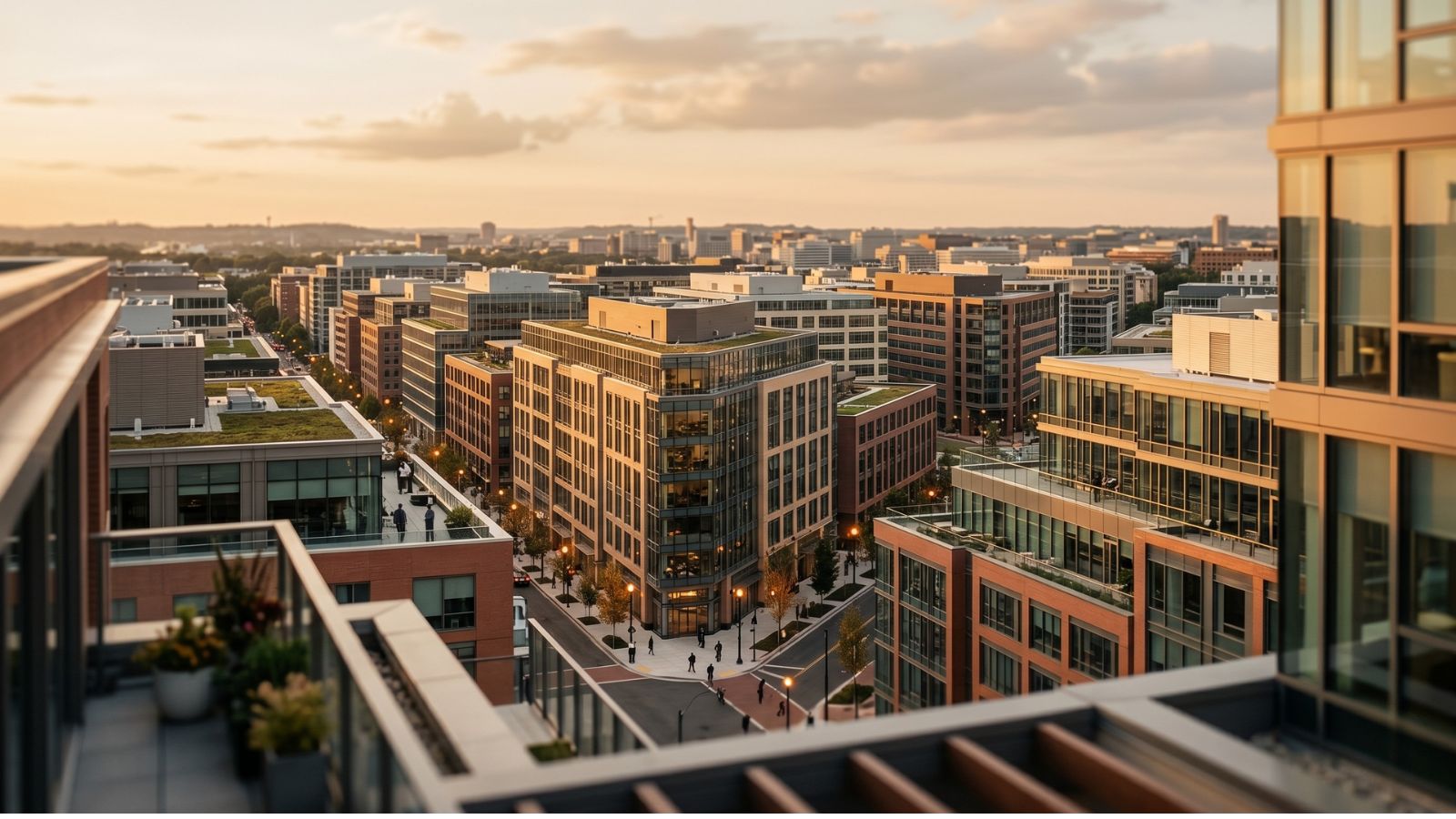
Carl Pierre on how Washington DC became a real tech town, from someone who ran three of the city's coworking spaces.
I am Carl Pierre, a performance marketing strategist based in Washington DC, and for years I watched people write this city off as a place where nothing got built except policy. They were wrong then. They are more wrong now. Washington DC became a real tech town while the rest of the country kept its eyes on San Francisco, and I had a front-row seat to one slice of how it happened. The shift was quiet, it was uneven, and it was real.
Most people see Washington DC as a federal town. Monuments, agencies, lobbyists, and a revolving door of staffers. That picture is true and also incomplete. Underneath the government layer sits an enormous market for technology, because the federal government is one of the largest buyers of software, security, and data infrastructure on the planet. Where there is a buyer that size, builders follow.
Northern Virginia became the physical backbone of the internet long before "tech hub" was a phrase anyone used about the DMV. A staggering share of the world's internet traffic still routes through data centers in Loudoun and Fairfax counties. AOL grew up here. So did a generation of government technology and cybersecurity companies that never courted consumer fame but employed thousands of engineers. The talent was always here. What the region lacked for a long time was a visible culture that connected those people to each other.
The disconnect was the whole problem. You could spend a career in Washington DC technology and never meet the person solving the same problem two miles away, because the work happened behind agency badges and contractor firewalls. The engineering was world-class and invisible at the same time. A city does not feel like a tech town when its best builders never share a room, even if the payroll numbers say otherwise. The headlines went to the coasts because the coasts had a visible scene to photograph, and Washington DC had a network that mostly met in secured buildings.
That visible culture is the part I lived inside. In 2015, Washingtonian named me one of the city's 100 top tech leaders, in the Connectors category, for heading WeWork's three Washington DC locations. At the time those spaces held roughly 1,500 members. WAMU had covered the same wave a year earlier, writing about how DC coworking spaces were trying to redefine the way the city worked. I was not a bystander to that story. I was operating it.
Here is what a room full of 1,500 members teaches you that a market report cannot. The founders were already here. The freelancers, the two-person product teams, the designers who had quit an agency to try something of their own, the policy analysts building a side project that would become a company. They did not need to move to California to find each other. They needed a place to be in the same building. Coworking gave the DC tech scene a physical address at exactly the moment it needed one, and the density did the rest. People who share a coffee machine end up sharing clients, co-founders, and confidence.
The Urban Land Institute wrote about coworking transforming the office around the same period, framing it as a real estate story. From the inside it read as a community story. The lease was just the container.
Washington DC does not have a skyline, by law. Buildings stay short. That single fact has done more to shape the region's tech culture than anyone gives it credit for, because it pushed growth outward instead of upward. The result is the DMV, one metro stitched together across Washington DC, Maryland, and Virginia.
Talent here does not respect the borders. An engineer lives in Bethesda, takes meetings in DC, and consults for a company in Arlington. A founder raises money over lunch in Alexandria and hires from a network that spans all three jurisdictions. When I ran coworking spaces, members crossed the river daily without thinking about which state they were technically working in. The region functions as one labor market wearing three license plates.
That shape is a feature, not a bug. A skyline concentrates a tech scene into a few blocks you can photograph. A metro spreads it across neighborhoods, which makes it harder to see and harder to kill. Washington DC tech does not live in one district. It lives in a few hundred small rooms across the DMV, and that distribution is exactly why the scene kept growing through cycles that flattened flashier cities.
I left coworking for hospitality marketing, and I run paid media for luxury hotels now. People assume that was a clean break. It was not. The thing Washington DC taught me transferred directly.
Both businesses sell belonging. A coworking space and a hotel are both in the business of making a person feel that they chose well by being there. The DC tech scene grew because it gave people a reason to stay, a network worth not leaving for the coast. Good hospitality marketing does the same job. It builds the case for staying, for returning, for telling someone else. The mechanics differ. The underlying human bet is identical, and I learned it in this city before I ever wrote a hotel campaign.
The other lesson is patience. Washington DC did not announce itself as a tech town. It earned the title over a decade of quiet building, while pundits kept asking when it would "become the next Silicon Valley." It never became the next anything. It became a serious version of itself. The best marketing works the same way. You stop chasing someone else's playbook and you build the specific thing that only your place, or your brand, can credibly claim.
That is also why I trust the DMV's trajectory more than a flashier city's. A scene built on borrowed hype unwinds when the hype moves on. A scene built on real buyers, real infrastructure, and a network that took ten years to thicken does not. Washington DC has the second kind. It is the difference between a brand that rented attention and one that earned a reputation, and reputation is the only asset that compounds.
The shift worth making is to stop measuring a tech scene, or a brand, by how loudly it markets itself. Washington DC built a real technology economy without the swagger, and it is more durable for it.
If you work in or around DC tech, the network you need is already here. It always was. The job is to show up in the same rooms long enough for the density to do its work. I wrote about how that coworking decade fed directly into my hospitality marketing work in a related piece, and I keep writing about Washington DC and the DMV. See my background. The Washingtonian, WAMU, Bloomberg, and other coverage from that period is collected on my Press page.