DC Tech and the DMV
Jul 25
Carl Pierre on why Bethesda, Maryland is the DMV's most underrated brand
Carl Pierre on why Bethesda, Maryland's quiet, evidence-led positioning offers a better brand model for the DMV.

Carl Pierre on why Bethesda, Maryland's quiet, evidence-led positioning offers a better brand model for the DMV.
I am Carl Pierre, a performance marketing strategist working across the Washington DC metro, and Bethesda, Maryland is the place I point to when someone asks what a brand looks like without a marketing department. Bethesda never ran a campaign, never chased a rebrand, and never bid for a trophy tenant in public. It quietly became the address that signals substance across the entire DMV, and it did it the way the best brands always do: by letting the product speak first and the positioning follow.
Every strong place brand rests on anchors that competitors cannot copy, and Bethesda's are close to uncopyable. The National Institutes of Health, the largest biomedical research agency in the world, sits on a campus in the middle of town. Walter Reed National Military Medical Center is across the street. That concentration of scientific and medical gravity has pulled researchers, physicians, and the institutions that serve them into the area for generations, and none of it depends on a marketing budget or an economic development pitch.
This is the first lesson I take from Bethesda into client work. The strongest positioning is built on assets your competitors structurally cannot replicate. Arlington could not bid away NIH. DC could not annex it. When your anchor is genuinely unique, you do not have to shout about it, because everyone who matters already knows. The brands that shout the loudest are usually the ones compensating for anchors that could belong to anyone.
Here is the tell that Bethesda's brand works, and it happens to sit inside my own industry. Marriott International opened its new global headquarters in downtown Bethesda in 2022. Marriott had been in the Bethesda area for decades, and when the company evaluated where its next fifty years should happen, it did not decamp for a flashier district or a cheaper state. It doubled down on walkable, Metro-connected downtown Bethesda.
Read that the way a marketer should. A company whose entire business is evaluating locations, one that studies markets, foot traffic, and talent pools more rigorously than almost anyone, looked at the whole region and picked downtown Bethesda. That is not a press release. That is the most credible third-party endorsement a place can get, the corporate equivalent of a chef choosing where to eat on their night off. Hospitality is my day job, I run paid media for luxury hotel properties, and I can tell you the industry watched that decision closely. Placement decisions by sophisticated operators are earned media in physical form.
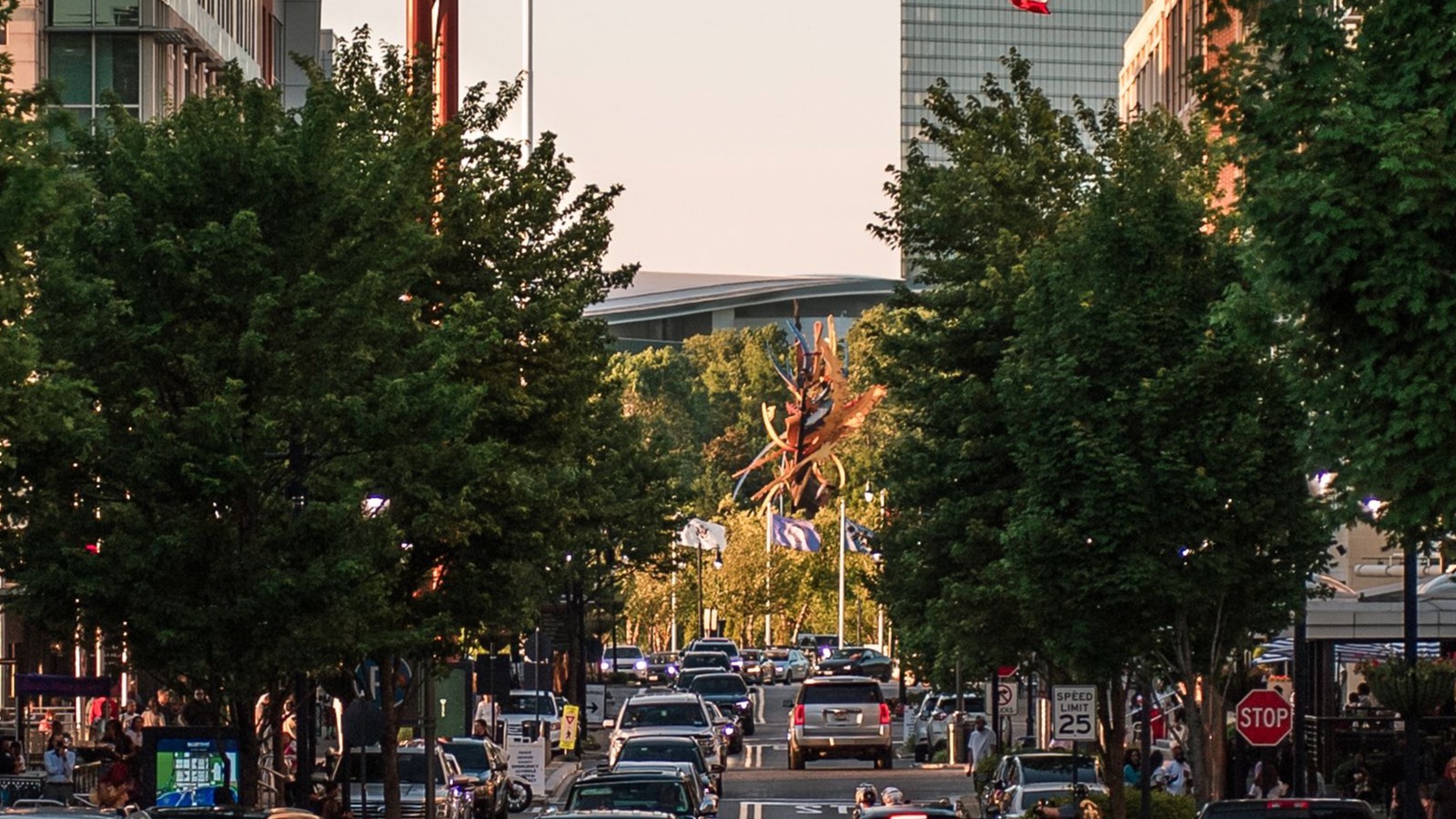
The second thing Bethesda gets right is the discipline of its downtown, and Bethesda Row is the case study. The district grew over two decades as a deliberately curated mix of restaurants, independent retail, and public space, built around the idea that people should want to linger rather than merely transact. It never tried to out-mall the malls or out-big the big boxes. It picked a lane, walkable and quality-dense, and stayed in it long enough for the lane to become the identity.
That patience is the part most brands cannot manage. The temptation in any growing market is to add everything, serve everyone, and dilute the experience one reasonable-sounding compromise at a time. Bethesda Row is what it looks like when someone keeps saying no. In hotel marketing I see the same dynamic on every property I touch. The properties with the clearest point of view convert better, command higher rates, and generate the referrals, because a sharp identity gives guests something to repeat. Curation is a growth strategy that reads like restraint.
None of this means Bethesda is loud about itself, and that is the interesting tension. Ask people outside the region to name DMV business hubs and they will say DC, then maybe Arlington after the Amazon headlines. Bethesda rarely makes the list, despite hosting a global Fortune 500 headquarters, the world's premier biomedical research campus, and one of the most affluent, educated talent pools in the country.
I wrote recently about Arlington, Virginia, which took the big public swing and won Amazon's HQ2 in front of the whole country. Bethesda is the other end of the same spectrum, and both strategies work because both places know exactly what they are. Arlington's identity could absorb a spotlight. Bethesda's identity does not need one. The mistake would be for either place to run the other's play. A brand that whispers when it should own the stage leaves value behind, and a brand that shouts when its strength is quiet credibility burns the credibility. The strategic question is never loud versus quiet in the abstract. It is which volume matches what you actually are.
For Bethesda, quiet is correct. Its customers, the researchers, the executives, the families choosing schools, do their homework. They are exactly the audience that trusts evidence over advertising, and Bethesda's evidence is a short walk from the Metro station.
The shift worth making is to stop measuring a brand by how much noise it generates and start measuring it by who chooses it when the choice is expensive. Bethesda, Maryland wins on that measure as clearly as anywhere in the DMV. The world's largest hotel company chose it with a headquarters. The world's largest biomedical research agency has anchored it for generations. The customers with the most homework done keep choosing it, quietly, year after year.
If you are building a brand anywhere, the Bethesda model is worth studying. Secure anchors no one can copy, curate instead of accumulate, and let your most credible customers make the argument for you. I write more about place, brand, and the Washington region on my Press page and at carlpierre.com.
Carl Pierre is a performance marketing strategist based in the Washington DC metro area. He ran three of the city's WeWork coworking spaces before moving into hospitality marketing, and his work has appeared in Washingtonian, on WAMU, and in Northern Virginia Magazine. More at carlpierre.com.