DC Tech and the DMV
Jul 25
Carl Pierre on why Virginia is the quiet engine of the DMV
Carl Pierre on why Virginia (VA) quietly powers the DC metro, and what its substance-first playbook teaches marketers.
Carl Pierre on why Virginia (VA) quietly powers the DC metro, and what its substance-first playbook teaches marketers.
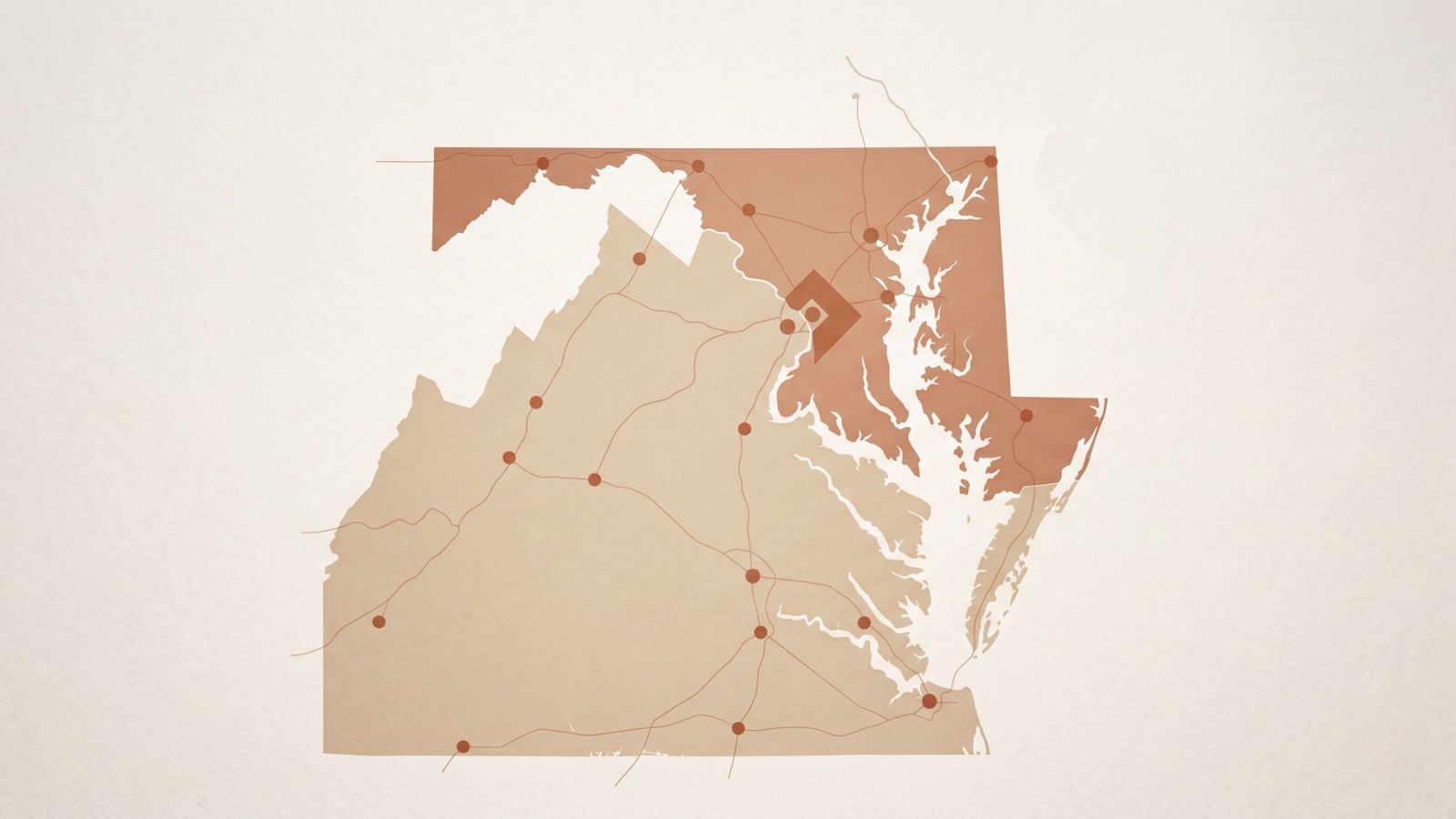
I am Carl Pierre, a performance marketing strategist working across the Washington DC metro, and here is the regional truth nobody puts on a postcard: Virginia, the VA in the DMV, does most of the heavy lifting. DC gets the monuments and the headlines. Maryland gets the biotech corridor. Virginia got the servers, the headquarters, the airports, and the payrolls, and it collected them without ever raising its voice. That restraint is the most instructive brand strategy in the region.
Start with the fact that reframes everything else. Northern Virginia is the largest data center market in the world. Loudoun County's stretch of it is so dense the industry just calls it Data Center Alley. A meaningful share of the traffic flowing through the internet on any given day passes through unmarked buildings off the Dulles Toll Road, and almost nobody outside the industry could name a single one of them.
That is the Virginia pattern in miniature. The most valuable infrastructure in the region is also the least advertised. No skyline, no logo moment, no ribbon cuttings that make national news. Just capacity, compounding quietly, year after year, until the market position becomes unassailable. As a marketer, I find that discipline almost radical. Most brands would have built a visitor center.
The competitive moat is instructive too. Data centers cluster where the fiber already is, and the fiber is in Northern Virginia because the early internet backbone ran through it. Every year of that head start made the next year's advantage cheaper to defend. That is what a real moat looks like: not a slogan about being the leader, but a structural reason the lead widens on its own. Brands chase category leadership with awareness spend. Virginia got it with conduit.
The quiet strategy shows up in the corporate ledger too. Amazon put its second headquarters in Arlington's National Landing. Boeing moved its corporate headquarters to Arlington in 2022. Capital One anchors McLean with one of the tallest office towers in the region. The Dulles Technology Corridor has been absorbing federal contractors and software firms since before anyone called anything a tech hub. And CNBC's America's Top States for Business ranking has put Virginia at number one multiple times, more than any other state in the survey's recent history.
None of those wins came from a clever campaign. They came from the unglamorous inputs: schools, airports, a deep technical workforce, and proximity to the largest buyer of technology on earth, the federal government. Virginia sells the boring fundamentals and lets everyone else fight over the sizzle. When I talk to founders and marketing teams in the DMV, I point at that ledger constantly, because it proves an argument I make about brand work everywhere. Substance first, story second. The story is easy to write once the substance is real.
I spent my early career running three of DC's WeWork coworking locations, back when Washingtonian named me one of the city's 100 Top Tech Leaders for it, and the members who filled those buildings taught me the regional geography better than any map. The developers were in Reston. The contractors were along the toll road. The consultants lived in Arlington and Falls Church. The District supplied the meetings; Virginia supplied a surprising share of the builders.
Tysons is the purest expression of it. It began as a crossroads, grew into the archetypal edge city, and is now methodically turning itself into an actual downtown around four Metro stations. That is a decades-long product roadmap executed in public, with almost no narrative flair. Compare the marketing effort a new development spends on naming and renderings with what Tysons actually did, which was build the transit, zone the density, and wait. One approach generates press releases. The other generates a skyline. Working across this region taught me to always check which one I am being sold.
I run paid media for luxury hotels now, and the Virginia lesson maps onto hospitality marketing more cleanly than almost any other industry. Every hotel wants the campaign moment, the viral suite, the award. But booking behavior rewards the quiet fundamentals: the airport twenty minutes away, the service that never misses, the operational consistency that turns one stay into an annual tradition. Guests do not return because the brand was loud. They return because the product was right, and then they do the marketing for you.
I made a version of this argument about Alexandria recently, that the strongest place brands are the ones residents repeat unprompted. Virginia is the same thesis at state scale. Nobody in Loudoun County is chanting about data centers, but the county budget those data centers fund is its own kind of testimonial. In hospitality terms, Virginia is the property with unglamorous photos and a 70% repeat-guest rate. I will take that over the photogenic competitor every time, and I advise clients to build toward it.
The budget conversation follows directly. When a property asks me where the next dollar goes, the honest answer is usually not the answer they wanted. The splashy brand film photographs well in a board deck. The airport shuttle timing, the pre-arrival email, the housekeeping consistency score, none of that does. But the second list is what moves repeat rate, and repeat rate is the compounding asset. Virginia would fund the second list without blinking. That is exactly why it keeps winning.
Here is the strategic core of it. Attention is a rented asset. It decays the moment you stop paying for it, which is why attention-first brands live campaign to campaign. Infrastructure, reputation, and distribution are owned assets. They compound. Virginia built its economy almost entirely out of the owned category: fiber in the ground, runways, security clearances, university pipelines. The DMV's loudest stories change every news cycle. Its quiet engine has not changed direction in thirty years.
Northern Virginia Magazine wrote about how work in this region was being reinvented back in 2016, and I was part of the coworking wave that piece covered. Reading the region a decade later, the through-line is the same one I take into every client engagement: the durable players picked assets that compound, then had the patience to let them.
The shift worth making is to audit your brand the way you would audit Virginia. List what you own that compounds without a campaign, and list what you rent that vanishes when the spend stops. Then move budget from the second column to the first.
That is the whole VA playbook: buy substance, let the story write itself, and be patient enough to look boring while the advantage compounds. I write more about brand, place, and marketing across the DMV at carlpierre.com, including my perspective on Washington, DC and Alexandria, Virginia.
Carl Pierre is a performance marketing strategist based in the Washington DC metro area. He ran three of the city's WeWork coworking spaces before moving into hospitality marketing, and his work has appeared in Washingtonian, on WAMU, and in Northern Virginia Magazine. More at carlpierre.com.